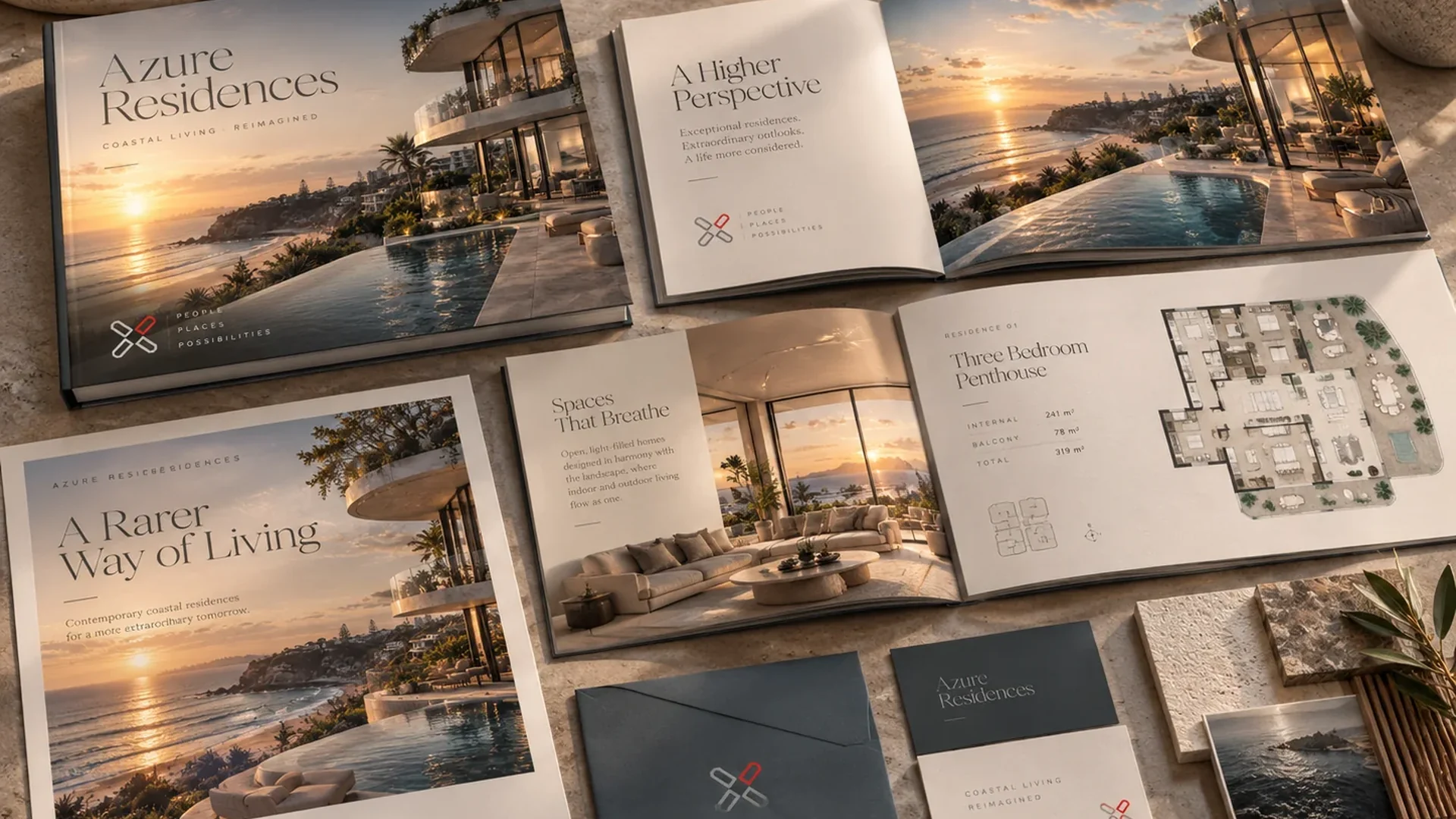
Property marketing creates value when it gives the market a clearer reason to care. That starts well before an advertising campaign. It begins with deciding what the project means, who it is most relevant to, what separates it from nearby alternatives and how those differences should be expressed consistently.
Marketing is not the promotion layer
Developers often inherit a fragmented sequence: architecture first, renders second, branding third, website fourth, media last. Each supplier receives the output of the previous one and does the best they can with it. The result may be competent, but competence is not the same thing as a strong market position.
A strategic property marketing process works in the opposite direction. It starts by identifying the market idea that should guide the buyer experience. The visual identity, render direction, copy, website hierarchy, brochure, social creative and paid campaign then become expressions of that idea.
Media creates reach. Positioning determines what the reach is carrying.
Why perception affects commercial outcomes
Property is unusually dependent on perception because buyers are asked to assess many forms of value at once. Architecture, floorplan, amenity, location, finishes, developer credibility, lifestyle, future value and emotional fit all compete for attention. The brand is the system that organises those signals.
Good property marketing does not invent value that is not there. It makes real value easier to recognise. It creates a hierarchy: this is what matters most, this is how the pieces connect, and this is why the project belongs in a particular part of the market.
What an integrated marketing foundation should establish
- A clear primary audience and buying context.
- A defensible market position rather than a generic luxury promise.
- A name and identity capable of carrying the campaign for its full life.
- A visual and verbal system that works across digital and physical channels.
- A website structure that answers buyer questions and makes enquiry easy.
- A content and search strategy that can compound over time.
- Sales collateral that feels consistent with the price and quality of the product.
Why this makes media work harder
A campaign with a strong proposition tends to create better consistency between ad and destination. The buyer sees an idea in social, recognises it on the project website, feels it again in the brochure and hears the sales agent explain the same logic. That repetition is not boring when the idea is good; it is how familiarity and preference are built.
By contrast, a project with disconnected creative often spends paid media overcoming its own inconsistency. Different visuals imply different audiences. Website copy sounds unlike the brochure. The project name has no strategic role. Calls to action are scattered. Every new piece starts from zero.
Property marketing as risk reduction
For a development with a substantial gross realisation, the marketing budget is small relative to the value it is expected to help unlock. That does not mean every project needs extravagant production. It means the strategic decisions deserve proportionate care.
Doing the thinking early can reduce rework, avoid rushed naming decisions, improve briefing of render and photography partners, simplify campaign production and create a more coherent sales environment. It can also help a developer recognise where not to spend.
The question to ask before launch
Before asking how many leads the campaign should generate, ask a harder question: if a qualified buyer sees this project beside three credible alternatives, what will they remember about ours?
If the answer is only the suburb, the view or the price, there may still be brand work to do.